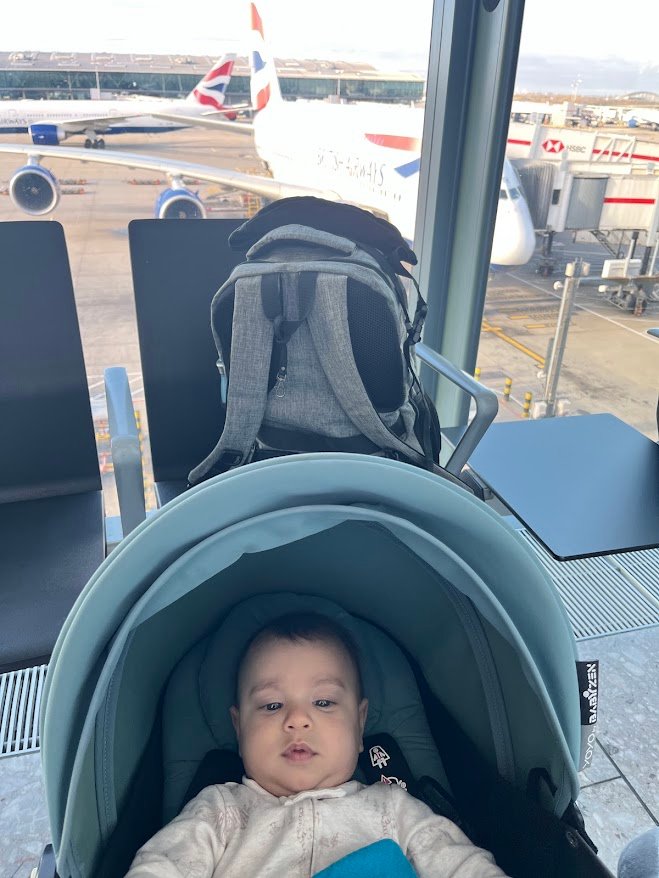
How to Pack for Travel with a Newborn: A Practical Guide for Flying with a Baby

Traveling with a newborn might sound daunting, but in my opinion, this is actually one of the easiest times to travel with a baby, as long as everyone is healthy and fit enough to travel.
Babies under six months aren’t mobile yet, and they likely haven’t started eating solid food, so packing for a newborn can be much easier than you might think!
We’ve traveled with our babies from as young as eight weeks old, and having done it four times, I’ve learned that you really don’t need as much as baby companies would have you believe. A little preparation goes a long way, and you don’t need to pack your entire house just because you’re traveling with a tiny human.
Here’s everything you need to know about preparing for your first trip with a newborn, from getting their passport to what I actually pack in our carry-on bags.
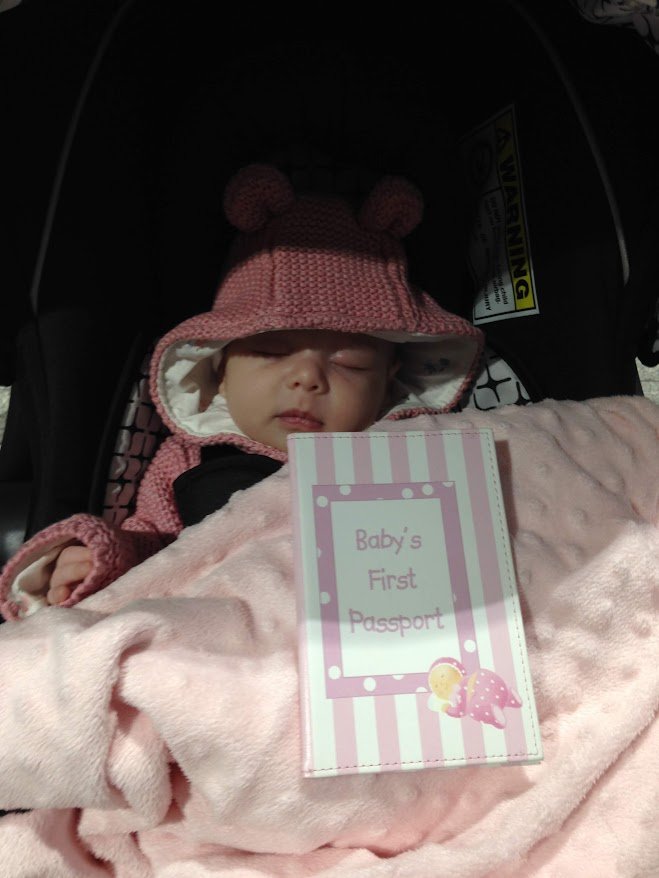
1. Get your baby’s passport sorted
Before you start thinking about packing, you’ll need to make sure your baby has the correct travel documents.
You can’t travel internationally without a passport for your baby, and the application process can take several weeks, so it’s worth getting started as soon as you can.
With my children, we applied for their passports within the first week after birth, with the exception of my COVID baby, when we waited a little longer because we weren’t traveling as much. You can find information on how to apply for baby’s first US passport here and UK passport here.
You’ll need your baby’s birth certificate before you can apply for a passport, so make sure you take care of that first. You’ll also need a passport photo, although the rules for newborns are a little more relaxed than for older children. For example, babies generally don’t have to have their eyes open in their passport photo.
As an American living in the UK, we had to arrange American passports for our children as well as the relevant UK travel documents. For our American passports, we first needed a Consular Report of Birth Abroad (CRBA), which involves a few additional steps, but that is worthy of a separate post.
My tip: If you know you want to travel soon after your baby is born, start researching the paperwork before the birth. You’ll have plenty of other things to think about once your newborn arrives!
2. When can you travel internationally with a newborn?
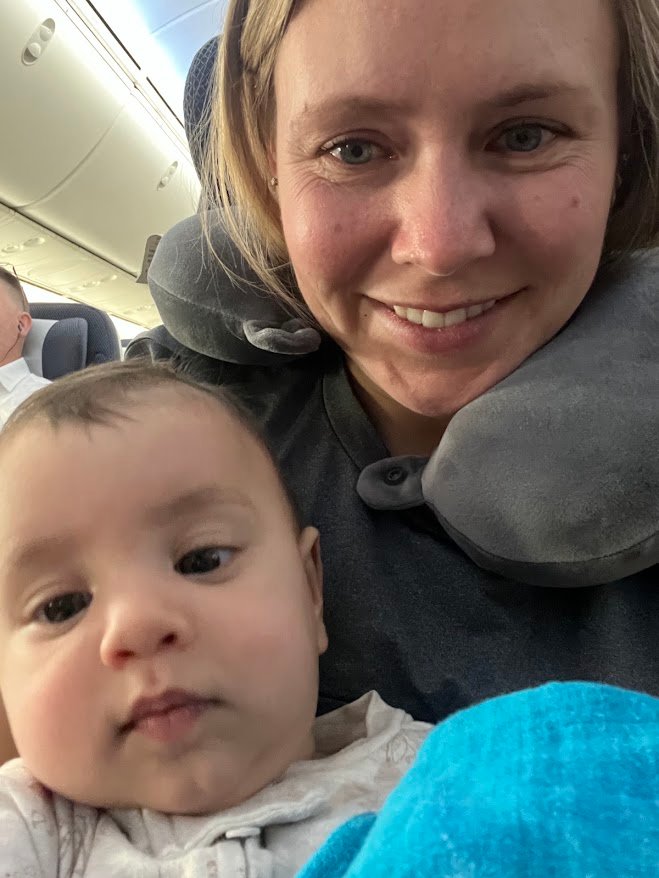
The youngest we’ve traveled with our babies was eight weeks old.
Personally, I wouldn’t recommend international travel before eight weeks. Newborns have developing immune systems, and depending on their age, they may not yet have received their routine vaccinations. Airports, airplanes, and other busy public spaces also mean exposure to lots of people.
This is my personal approach rather than a universal medical rule. Every baby is different, so speak to your pediatrician or other healthcare professional before booking travel, particularly if your baby was premature or has any medical concerns. You should also check any minimum-age requirements imposed by your airline.
Once you’re ready to travel, the good news is that you can keep your packing list relatively simple.
3. My newborn travel packing list
Newborns don’t need nearly as much as you might think, so I apply the same minimalist packing approach to traveling with babies as I do to our other family trips.
Here’s what I’d pack.
Diapers and wipes
- Diapers (nappies): Brand-new babies can go through as many as 10 diapers a day, while babies around three months old may need closer to six. Pack enough for the travel day, plus a few days’ worth until you can get to a store. Unless you’re going somewhere very remote, there’s no need to pack enough for your entire trip.
- Baby wipes: Essential for diaper changes, sticky hands, and all the other little messes that come with traveling with a baby.
- A changing mat: Instead of packing a bulky changing mat, I use a muslin cloth when we travel. It takes up much less room and can serve other purposes, too.
- Travel-size diaper rash cream: A small amount is all you need.
- Muslin or burp cloths: These are useful for spit-up, dribbles, and just about anything else you can think of.
Clothes
Pack more changes of clothes than you think you’ll need. Newborns are notorious for spitting up and having unexpected diaper blowouts, and airplanes are no exception. I bring at least 4–5 outfits for the baby, even for a short trip. Newborns are unpredictable and you can go through several outfits in a day!
I also pack a complete change of clothes for myself and my husband, not just an extra top. Trust me, a diaper leak can get everywhere! It’s much easier to change into a fresh outfit than spend the rest of the journey in clothes covered in baby mess.
For the plane, I wouldn’t bother with complicated outfits. Zip-up pajamas are my go-to because they’re comfortable and make diaper changes easy.
Luckily, newborn clothes are tiny, so you can fit several outfits into a relatively small space.
If you’re heading to a beach or resort, you may also need:
- A sun hat
- A swimsuit
- Swim diapers
- A compact inflatable baby float, if appropriate for your plans and baby’s age
We went to Cancun when one of my children was less than three months old and stayed at The Grand at Moon Palace, which was extremely family-friendly.
Plastic bags
Bring a few plastic bags or reusable wet bags to store soiled clothes until you reach your destination. You’ll be glad you have somewhere to put that outfit after a diaper blowout!
Pacifiers (dummies)
If your baby uses a pacifier, pack one or two extras in case they get dirty or disappear at the worst possible moment.
Feeding equipment
What you need depends on how you feed your baby. One of my babies was exclusively bottle-fed, one was exclusively breastfed, and two were combination-fed, so I’ve tried all three approaches while traveling.
Breastfeeding
If you exclusively breastfeed, this is probably the easiest option when it comes to packing. You don’t need to carry bottles, formula, or other feeding equipment.
I made sure to wear breastfeeding-friendly outfits and felt more comfortable using a nursing cover, although you could use a muslin cloth or nothing at all if that’s what you prefer.
The main thing is to wear something comfortable that makes feeding your baby easy, especially when you’re in a cramped airplane seat.
Bottle-feeding
Bottle-feeding requires a little more preparation and packing.
You’ll need enough formula for your journey, clean bottles for the flight and airport transfers, and a way to prepare feeds safely. Depending on your setup, you’ll also need suitable water and something to clean your bottles with.
I usually bring all the formula I think I’ll need for a trip, although it’s often possible to find a similar formula at your destination. If your baby has medical needs, allergies, or a particularly sensitive stomach, don’t assume you can easily find a suitable alternative.
Formula prices can vary considerably between countries. When traveling from the UK to the US, for example, I would bring several packs with me rather than rely on buying it at our destination.
Earlier this year when we went to Greece with our baby, I had premeasured the formula into little containers for our travel day but forgot to pack the rest of the formula. We ended up buying some in Greece, and it was perfectly fine!
For preparing bottles on the go, I bring an empty thermos and premeasure the formula into a dispenser. You can get dispensers with separate compartments for multiple feeds, which makes things easier when you’re out and about. You can stop by a restaurant or café at the airport and they’ll give you hot water to take on the plane.
My biggest tip: Always pack more formula than you think you’ll need in your carry-on. Delays happen, and babies don’t always stick to their usual feeding schedule!
Combination feeding
If you combine breastfeeding and bottle-feeding, you can tailor your packing list to suit your baby. You may only need a small amount of formula and a couple of bottles, depending on how often your baby takes them.
The key is to bring enough supplies to get through the travel day comfortably, with a little extra in case of delays.
A passive breast pump
I only discovered this with my fourth child, and I wish I’d known about it sooner!
A passive breast pump, such as a Haakaa, can collect milk from the opposite breast while you’re feeding your baby. During the early months, when I experienced more milk leakage, I found it particularly useful.
I wouldn’t use it while flying, but on other days during our travels, I would feed the baby on one side and use the Haakaa on the other. I could often collect enough milk to leave with another family member if I needed to be away from my baby for a couple of hours.
This gave me a lot more flexibility while traveling, particularly because my baby would also take a bottle.
A baby carrier or sling
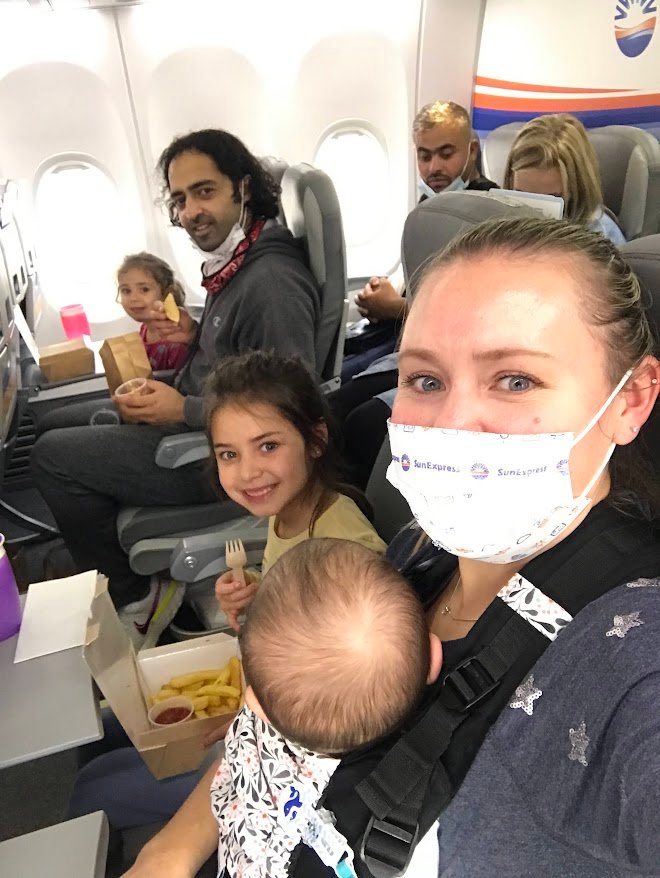
This is an absolute must for me!
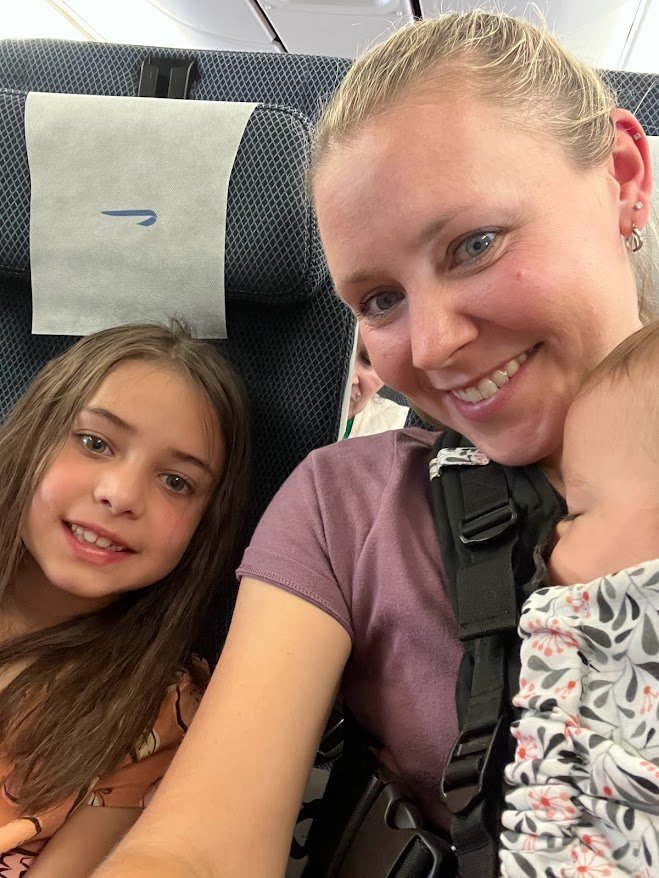
Being able to hold your baby hands-free makes traveling so much easier. You can carry your luggage, eat a meal, and give your arms a break. If your baby settles well in a carrier, you might even get a little rest yourself.
If you’re gate-checking your stroller, you’ll need to carry your baby onto the plane along with your bags. For me, that’s usually one backpack for myself and another bag or backpack for the baby, so having my hands free is invaluable.
One thing to be aware of is that many airlines require you to remove your baby from the sling or carrier during take-off and landing. Some airlines also provide an infant seat belt that attaches to the adult seat belt, while others have different requirements.
I find this particularly annoying when my baby has just fallen asleep and I have to take them out of the sling and wake them up, but airline safety rules are airline safety rules!
Stroller and car seat
On all flights I’ve taken I was allowed to check-in or gate check two baby equipment items for free. For me this usually means a stroller and car seat, but if you need a travel bed for your baby this also qualifies.
You can generally take your stroller through the airport and gate-check it before boarding, although the exact arrangements vary by airline and airport.
Make sure you get the appropriate baggage tags at check-in or at the departure gate, depending on the airline’s procedure.
I’m currently using the super-compact YOYO stroller, which folds down small enough that some larger aircraft allow it to be taken onboard and stored in the overhead bin. Don’t assume this is guaranteed, though, as cabin baggage rules and available space vary.
If you’ll be traveling by car at your destination, think about whether you need to bring your own car seat or arrange one through your car rental company or transfer provider.
For newborns, I like a travel system where the infant car seat clips onto the stroller. This means you don’t have to carry the car seat everywhere. You can move it between the car and stroller without having to transfer your baby each time.
A storage bag for your stroller or car seat
If you’re checking your stroller or car seat, it’s worth investing in a suitable storage or travel bag to protect it from dirt and handling during transport. Early on I didn’t know this and my brand-new stroller got filthy on the way from London to Cancun!
Another handy trick is to put an extra pack of diapers and wipes inside the stroller bag. This way you have extra supplies when you land and it frees up some room in your carry-on for things you will need on board.
Toys and entertainment
Depending on your baby’s age, a small toy or two might be useful during the flight.
That said, toys aren’t essential for newborns. Mine were often just as interested in an empty water bottle or a plastic cup from the airplane!
As your baby gets older, you may want to bring a few more things to keep them entertained, but there’s no need to pack a whole toy box.
4. Should you book bulkhead seats with a bassinet?
If you’re flying on a larger aircraft, particularly on a transatlantic flight, it’s worth asking about bulkhead seating.
These seats are at the front of a section of the plane and often have a bassinet attachment for your baby. They also tend to offer extra legroom, which is welcome when you’re traveling with an infant.
Every airline has a different procedure for booking these seats. Some allow you to reserve them in advance, while others allocate them at check-in. Contact the airline as soon as you’ve booked your flight to find out how its system works.
If seats are allocated at check-in, I recommend arriving at the airport early. There are only a limited number of bassinets on most aircraft, and availability isn’t guaranteed. On some flights I’ve taken where there were several infants, the youngest babies were given priority.
Even if your baby doesn’t want to stay in the bassinet for long, it’s handy to have somewhere safe to put them down for a little while.
The extra legroom is another bonus, giving you more space to spread out with all your baby gear.
The main downside is that you’ll usually have to stow your carry-on luggage for take-off and landing because there isn’t a seat in front of you. The flight attendants can help if you need a hand getting everything put away.
And remember, having a sling is still important, even if you manage to secure a bassinet seat.
5. My top tips for flying with a newborn
After traveling with four children, these are the things I’d prioritize when planning a trip with a new baby.
- Pack for the travel day, not every possible scenario. You can usually buy diapers, wipes, and other essentials at your destination.
- Keep the important things in your carry-on. Diapers, wipes, spare clothes, feeding supplies, and anything your baby needs regularly should be easy to reach.
- Bring extra feeding supplies. Delays can happen, so allow more time and supplies than you expect to need.
- Use a baby carrier. It makes navigating the airport and boarding the plane so much easier.
- Ask about bassinet seats early. They’re helpful, but you shouldn’t rely on getting one.
- Choose practical clothing. Zip-up pajamas and easy-access feeding clothes will make your life easier than complicated outfits.
- Check the rules before you travel. Airlines differ in their policies for infant seating, bassinets, strollers, car seats, and feeding equipment.
Most importantly, remember that you don’t have to bring everything you own just because you’re traveling with a newborn. Focus on what your baby actually needs, and keep things as simple as possible.
6. Is traveling with a newborn easier than traveling with an older baby?
In my opinion, the first six months can be a wonderful time to travel with a baby.
Before they’re mobile and eating solid foods, there are fewer things to think about. You don’t need to plan meals around a baby’s feeding schedule, worry about them crawling off somewhere, or pack quite so much equipment to keep them entertained.
Of course, you’ll probably still be tired. Your baby may not be sleeping through the night, and you’ll need to work around their feeding and sleeping routines.
But you can be tired in a beautiful place instead!
A babymoon before your baby reaches six months can be a lovely opportunity to enjoy a change of scenery and spend time together as a family before life gets even busier.
Ready to plan your babymoon?
If you’re thinking about traveling with your newborn but aren’t sure where to start, I’d love to help!
As a travel advisor and a mom of four, I’ve experienced firsthand what it’s like to navigate airports, flights, and family-friendly destinations with little ones. I can help you find a baby-friendly resort, plan a relaxed European getaway, or put together an itinerary that makes traveling with a newborn feel a little less overwhelming.
Let’s find a trip that works for your growing family.